Two Pints, One Kebab, and the Saturday You Didn’t Plan
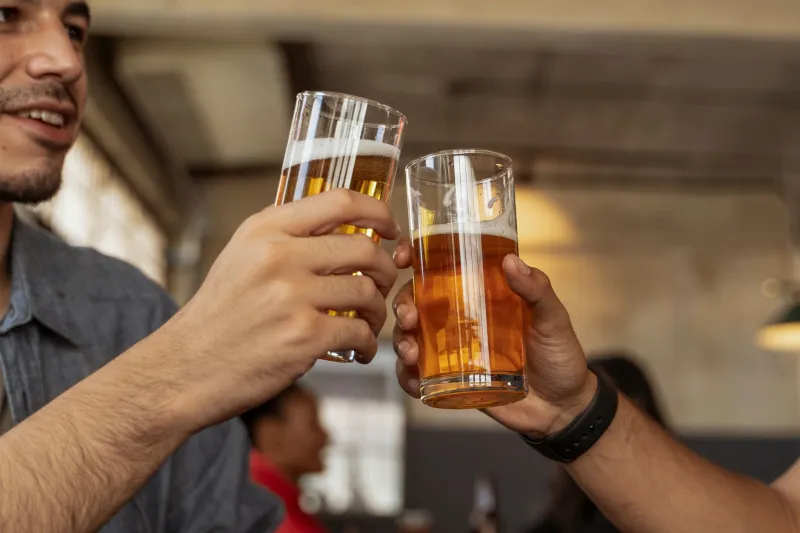
Friday night arrives, and with it the ritual: a couple of pints, something salty on the way home, and a vague plan to be “good” on Saturday. It’s not a character flaw. It’s a very British weekly rhythm, and it has a predictable effect on the rest of your week’s weight-loss maths. The point isn’t to ban the pub. It’s to see the whole picture clearly enough to make a few better choices without turning into the person nursing a soda water in the corner.
The pint isn’t the problem — the ripple is
Two pints of ordinary lager will set you back roughly 400–450 calories. A late-night kebab can easily add another 700–1,000, depending on size, sauce and how much of the pitta you actually eat. So the headline number for a fairly typical Friday is somewhere between 1,100 and 1,450 calories. That alone doesn’t wreck a week. A weekly deficit of 3,000–3,500 calories is a common rough target for steady loss, so one night can wipe out a third of it — or more if the night rolls into Saturday.
The bigger issue is what follows. Alcohol doesn’t just add calories; it changes the decisions you make afterwards. It lowers restraint, nudges appetite, and makes the 11:30pm kebab feel like a brilliant idea rather than a choice. Then comes the broken sleep, the tired Saturday, the skipped walk, the carb-heavy brunch, and the feeling that the weekend has already gone. That’s the ripple. The pints are visible. The Saturday aftermath is where the real cost hides.
What alcohol does before you’ve even ordered chips
Alcohol is not a neutral drink with a few calories attached. It affects appetite and sleep in ways that make healthy eating harder the next day. It can make you feel hungrier and less bothered about portion control. It can also fragment sleep, especially in the second half of the night, so you wake up tired and more likely to reach for quick energy — toast, pastries, a big coffee and something sweet.
That’s why a Friday night can feel like it “ruined” the week even when the calories weren’t catastrophic. The problem isn’t only the pint. It’s the low-energy, high-appetite Saturday that follows. If you’re someone who usually trains on Saturday morning, a heavy night can quietly remove the week’s best movement session. If you’re a parent, the school run and weekend logistics don’t pause for a hangover. The result is a day that feels harder, and food that feels more appealing.
The kebab is a symptom, not the crime
Late-night food is not a moral failure. It’s a predictable response to alcohol, lowered blood sugar, fatigue and a kitchen that’s closed. If you rely on willpower at 11:30pm, you’re playing a game you’ll often lose. The better move is to decide before you leave the house what the end of the night looks like.
That might mean eating a proper meal with protein before you go out — not “saving” calories all day, which usually backfires. It might mean ordering a smaller kebab with extra salad and no chips, or choosing a chicken wrap instead of a greasy burger. It might mean having something sensible ready at home: a yogurt, a banana, a slice of toast with peanut butter. Not glamorous, but it stops the late-night decision from being made by the hungriest version of you.
The pub maths you can actually use
You don’t need to become a calorie accountant to make Friday night less costly. A few rough numbers help. A pint of 4% lager is around 180–200 calories. A pint of 5% is closer to 220–250. A spirit with slimline tonic is usually around 55–60 calories. A glass of dry white wine is roughly 130–160, depending on size. A single gin and soda is not the same as four pints — and it’s fine to switch between them.
Practical swaps that don’t kill the night out:
- Alternate alcoholic drinks with water or soda water. It slows the pace and reduces the total.
- Try half pints or smaller bottles. You still get the ritual without the same volume.
- Choose lower-strength beer when it’s available. The difference between 4% and 5% adds up over a session.
- Eat a protein-led meal before you go. Eggs, chicken, fish, beans, yogurt — something that steadies hunger.
- Decide on the food plan before the first drink. One late-night item, not a full second dinner.
- Keep Saturday morning simple. A walk, not a punishing workout. Normal meals, not a “detox” day.
The Saturday repair job
What you do on Saturday matters more than most people think. The instinct is either to punish yourself with a tiny breakfast and a gruelling gym session, or to write off the whole weekend because Friday already happened. Both are unhelpful. A normal breakfast with protein, plenty of water and a gentle walk will do more for your week than an all-or-nothing reaction.
Don’t try to “earn back” the pints with a miserable day of restriction. That usually leads to a bigger blowout by Sunday evening. Instead, treat Saturday as a reset: eat regularly, include vegetables and protein, move a bit more than you would on the sofa, and go to bed at a sensible time. One night is one night. A two-day hangover eating pattern is what turns a small blip into a weekly problem.
Keep the pub, lose the guilt
The honest answer is that you can keep your Friday night and still see results. You just can’t pretend it’s free. Two pints and a kebab have a cost, and the cost is paid partly in calories and partly in the choices they make easier the next day. Once you accept that, you can plan around it instead of being surprised by it.
Maybe that means two pints instead of four. Maybe it means a spirit and soda, a shared chips, or a walk home instead of a taxi. Maybe it means choosing your Friday night carefully and keeping the rest of the week steady. None of that is preachy. It’s just a more realistic way to enjoy the pub without wondering why the scales refuse to budge.
Your week is not decided by one Friday. It’s decided by what happens on Saturday, Sunday and the ordinary days in between. Keep the social life. Just stop letting it quietly run the whole weekend.