Butter, Croutons and a Bread Roll: The Hidden Cost of a 'Light' Winter Lunch
November has a way of making soup feel like the sensible option. It is warm, it comes in a tub, and it usually sits in the chiller next to something with kale in it. For anyone trying to keep an eye on portions as the cold settles in, a soup-and-roll lunch can feel like the obvious move: comforting, quick and apparently light.
But there is a gap between what a soup lunch feels like and what it actually delivers. That gap is often made of butter, croutons, a larger-than-you-think tub and a bread roll that has quietly become a main event. None of these things are villains. They are just easy to overlook when the word 'soup' is doing a lot of emotional heavy lifting.
The virtue halo around a bowl of soup
Soup has a reputation problem in reverse: we assume it is lighter than it is. It is wet, it is often vegetable-based, and it requires a spoon, which somehow makes it feel like a detox in a cardboard sleeve. In reality, soup ranges from a lean broth to something closer to a cream sauce with carrots floating in it.
The supermarket chiller is full of both. A fresh tomato and basil soup may be modest. A creamy chicken, mushroom or 'luxury' vegetable soup can be much richer. The word 'light' on the front of the tub might mean lower fat than the standard version, but it does not automatically mean low calorie. It might simply mean the recipe has less fat and more starch, sugar or salt to keep it tasting good.
Your roll is not a sidekick
This is where the maths starts to wobble. A bread roll is rarely just a bread roll. A medium supermarket roll can be around 250 to 300 calories before anything is spread on it. Add butter, and a generous scrape can easily add another 100 calories. Two little catering pats and you are closer to 400 calories before the soup has even been opened.
That is not a reason to fear bread. It is a reason to notice it. A roll with butter is a legitimate part of lunch, but it is not a free garnish. If the plan is a genuinely lighter midday meal, the roll needs to be counted rather than absent-mindedly torn open while the soup heats.
The finishing touches are where it gets messy
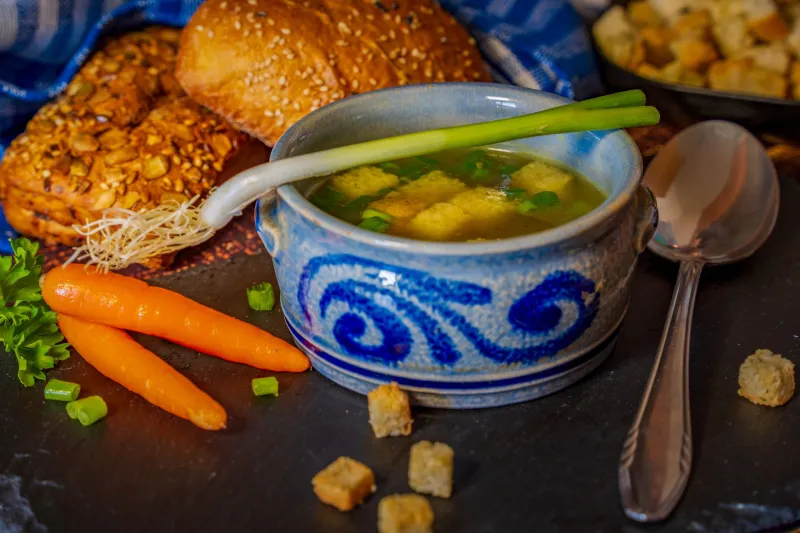
Croutons are the classic example. A small handful can add 50 to 100 calories depending on size and oil content. A swirl of cream, a sprinkle of cheese, a drizzle of chilli oil or a pack of seeds can each seem tiny in isolation. Together, they turn a modest bowl into something much more substantial.
This is not about banning toppings. Texture and flavour matter, especially in winter. But the clean-label shopper’s habit applies here too: look at what has been added, not just what the main ingredient is. A soup with a short, recognisable ingredient list is often a better starting point than one with a long list of starches, flavour enhancers and 'finishing' ingredients built in.
A fair fight with a burger and chips
It sounds absurd to compare soup to a burger and chips, but the comparison is useful because it breaks the spell. A large creamy soup, a buttered roll and a handful of croutons can land in the region of 550 to 650 calories. A modest burger and a small portion of chips can be higher, but the soup lunch is no longer in a different league. It is in the same postcode.
That does not make the soup the worse choice. It may still have more vegetables, more fibre and more water, and it may be far more satisfying on a freezing Tuesday. But if the reason you chose it was 'because it’s light', it is worth checking whether that is actually true. A lunch does not need to be tiny to be good. It just needs to be honest.
How to read a soup label like a clean-label shopper
Start with the portion size. Many chilled soups are sold in tubs that contain two portions, even if the tub looks like one lunch. Check whether the calories are per 100g, per half tub or per whole carton. The difference can be substantial.
Then look at the ingredients list. Cream, butter, oils and cheese are not automatically bad, but they explain the calorie count. So does added sugar, which can turn up in surprising places, including vegetable soups. Salt matters too, especially if you are having soup several times a week.
Finally, look for something that will keep you full: protein or fibre. Lentils, beans, chicken, vegetables and wholegrains are useful clues. A soup that is mostly stock and starch may taste lovely but leave you hunting for biscuits by 3pm.
Swaps that keep the warmth
You do not need to give up soup. Choose broth-based or tomato-based soups more often, and keep creamy ones as an occasional treat rather than the default. If you want a roll, have half of it and spread it thinly rather than generously. Add crunch with a small portion of croutons on the side, so you can see how many you are eating.
If you are making soup at home, bulk it out with lentils, beans or leftover vegetables. A spoonful of Greek yoghurt or a squeeze of lemon can add creaminess and flavour without needing a cream swirl. And if you are buying lunch on the go, consider adding a piece of fruit or some extra veg on the side rather than relying on the soup alone to carry you to dinner.
The bottom line
Soup and a roll can be a brilliant winter lunch. It is warming, practical and often more vegetable-rich than a sandwich. But the 'light' label is not a guarantee, and the extras are where the calories quietly gather. Read the tub, count the butter, and decide what you actually want from lunch. Clean-label thinking is not just for supplements. It belongs in the chiller aisle too.